
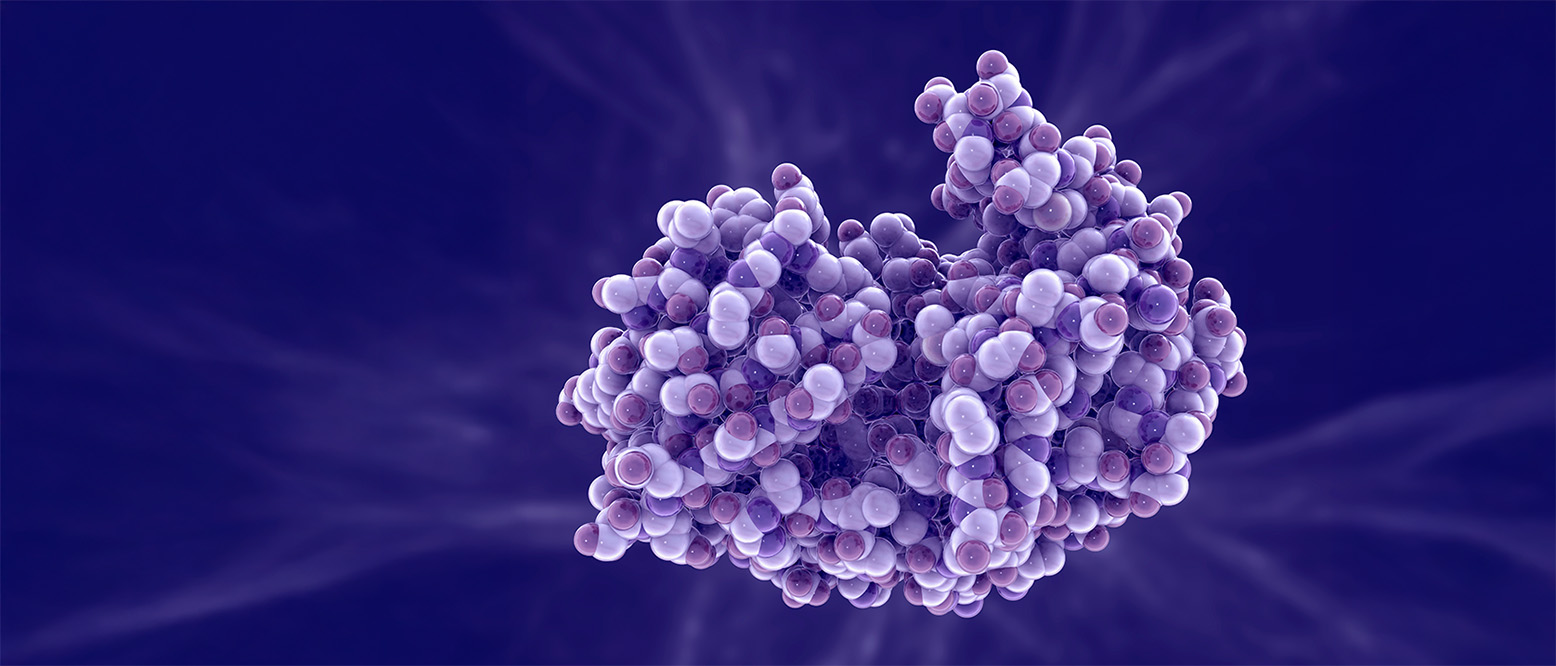
Molecular diagnostic platforms, sequencing technologies, and point-of-care systems are becoming increasingly specialized. These devices often feature microfluidic cartridges, ultra-low reaction volumes, rapid cycling protocols, and simplified workflows that minimize sample cleanup, as well as lyophilized/ambient stable formats. With increasing differentiation, generic ‘one-size-fits-all’ enzymes are hitting constraints that they were not designed to handle including: lack of stability, poor processivity, limited shelf-life, and high cost.
Platform developers who find that generic, off-the-shelf enzymes are falling short of the required performance usually turn to custom enzymes and reagents that are tailored to fit their specific needs. While the changes they need may involve simple parameters like enzyme concentration or reaction buffer formulation, more often the best route is de novo development of a proprietary enzyme that inherently delivers the performance requirements of the application.
Without that route, teams are often left choosing between compromising their ideal design (“jamming a square peg into a round hole”) or attempting to build the enzyme program internally, which typically requires infrastructure and expertise that many development groups don’t have on hand for timely execution.
Fortis Life Sciences has built its enzyme business to meet this exact need by providing development teams with purpose-built de novo enzymes that behave reliably in their systems without costly redesigns.
Outsourcing custom enzyme production has significant advantages beyond convenience. It is a strategic decision that affects development pace, assay performance, and long-term scalability. Below we describe why the selection of de novo enzymes matters and how Fortis approaches these unique projects.
What de novo customization means
De novo in this context does not simply involve adjusting specifications on an existing catalog enzyme. The Fortis approach yields a specialized enzyme with a defined function starting from scratch with a new, novel or completely custom enzyme.
De novo enzymes (also known as custom, engineered, or bespoke enzymes) refer to enzymes that have been structurally and/or genetically modified to have novel or enhanced properties that go beyond their natural function. For assay developers, common objectives may include:
- Enhanced sensitivity or specificity tuned to the target, often achieved through directed evolution or rational design.
- Improved catalytic control or stability under specific assay conditions, via chemical modification of the enzyme.
- Expanded or redirected substrate range that encompass a wider target range, achieved by entirely new catalytic functions where no natural analog exists.
- Improved performance under high-temperature cycling, low-pH buffers, or other demanding conditions.
- Delivering bio-sensor ready or delivery-optimized enzymes, produced through conjugation to synthetic tags.
When the de novo customized path is the right move
Fortis Life Sciences offers off-the-shelf reagents and enzymes for a wide variety of applications such as PCR, RT-PCR, isothermal amplification, NGS, CRISPR applications, and sample preparation. In some cases, this portfolio offers the right starting point for teams who need relatively minor changes to existing enzymes with known properties. Every reagent or enzyme Fortis offers is “customizable” for concentration and formulation and is also available in a lyophilized format.
It might be possible, however, that the enzyme an application requires isn’t available on the market and instead requires a de novo approach. A de novo approach is usually justified when a developer needs a significant step-up in enzyme performance (i.e., increased sensitivity or specificity) or has a device format (e.g., cartridges, microfluidics, etc.) that rules out existing catalog enzymes. Many of the newest diagnostic and sequencing platforms are co-designed for use with fully proprietary reagents including engineered enzymes that are adapted to non-natural functions. In this case, de novo enzyme development is the only approach that will work.
Why is outsourcing custom enzymes so effective?
Building internal enzyme manufacturing from scratch is a significant undertaking. It requires design know-how, fermentation systems, chromatography workflows, specialized QC assays, and an established and compliant quality system. Even companies with strong R&D groups may find they lack the capacity, or the specialized manufacturing expertise required to produce enzymes consistently on a manufacturing scale.
Organizations can move faster and still deliver high-performance products by outsourcing custom enzyme development and manufacturing. Instead of troubleshooting fermentations or running purification columns, your development scientists can focus their efforts on their key priorities: designing the device, optimizing the assay, advancing through the verification/validation phases while ensuring adherence to regulatory requirements.
Outsourcing custom enzyme development is not just efficient, it can be essential to reaching the market without delay. Fortis Life Sciences has a broad enzyme portfolio, built through a robust manufacturing system, that serves as a foundation to execute de novo projects. Early prototypes of your de novo project can start to be delivered for evaluation often in eight weeks or less.
How Fortis Life Sciences tailors de novo custom enzymes
The ability to develop manufacturing processes considering enzyme requirement and specification is what separates Fortis from catalog-only suppliers. The process begins with a technical consultation where Fortis development scientists examine the manufacturing workflow, the required performance characteristics, and any unique specifications related to formulation, concentration, stability, or device integration.
As a recent example, a development team needed to produce their specific proprietary enzyme for use in an IVD application. The team required it to be developed and manufactured under a documented Quality System at full production scale. For this project, early engagement with the development, manufacturing, and quality teams was critical. The Fortis team began first by learning about the application, gathering product requirements, identifying performance specifications, and understanding manufacturing and quality system expectations. This kind of early cross-functional alignment helped establish a clear development path and supported an efficient transfer of a custom enzyme from concept into a quality-controlled manufacturing process.
Some development teams will start with engineered protein variants and rely on Fortis to translate the optimal variant into scalable, reproducible products manufactured under a documented quality system. Once the optimal formulation is established, it is transferred into Fortis’ controlled manufacturing environment, where consistency, documentation, and reproducibility take center stage. By combining scientific expertise, rapid iteration, and robust manufacturing, Fortis gives companies a direct path from concept to commercialization without the cost or complexity of doing it alone.
Development teams that have novel devices or kits and proprietary workflows for a broad range of molecular biology assay types can benefit from Fortis’s solid track record of working with a broad range of organizations and different applications. These include applications in point-of-care nucleic acid amplification, next-generation sequencing library prep, and custom enzyme reagents for microfluidic cassettes that require a lyophilized format. Fortis can support your team with development and manufacturing of custom enzymes, along with required buffers and ancillary reagents.
Quality systems and supply chain reliability are crucial
When custom enzymes are used in products destined for regulated applications including clinical diagnostics, the quality system used to manufacture the enzyme becomes as critical as the enzyme itself. Projects benefit from the structure provided by the strict requirements of an ISO 13485 certified Quality System, starting with early-stage feasibility and specification development and transitioning into large scale manufacturing. Fortis strategically integrates robust quality controls at appropriate stages of production, including nuclease testing, host-DNA background assays, stability studies, and confirmation of functional performance. All services and products are performed and manufactured at our facility in Grand Rapids, MI, USA.
Supply chain reliability is also critical for any successful product. Developing a custom enzyme is only part of the challenge, while maintaining uninterrupted supply is equally important. Fortis offers redundant warehousing footprints across the US and can stock product and WIP to ensure continuity of supply. Fortis does not operate manufacturing or R&D facilities overseas, has transparent supply chains, and is BIOSECURE compliant.
Fortis can provide flexibility for quick development, ISO certified and GMP compliant manufacturing, and advanced stabilization and lyophilization of manufactured products. The ability to cover all three is a major differentiator, especially for teams who need true OEM-grade support rather than just R&D-scale enzyme work.
Summary
Custom enzymes have become essential building blocks to the design of competitive diagnostic and sequencing products, allowing teams to take control of their IP and supply chain. Choosing to outsource custom enzyme development is more than a tactical decision, it’s a foundational strategy for speed, reliability, and long-term competitive advantage.
Learn more about custom enzyme development. Contact us